

New 10 AI Prompts for Sci-Fi, Fantasy, and Surreal Digital Illustrations with Mythological Creatures
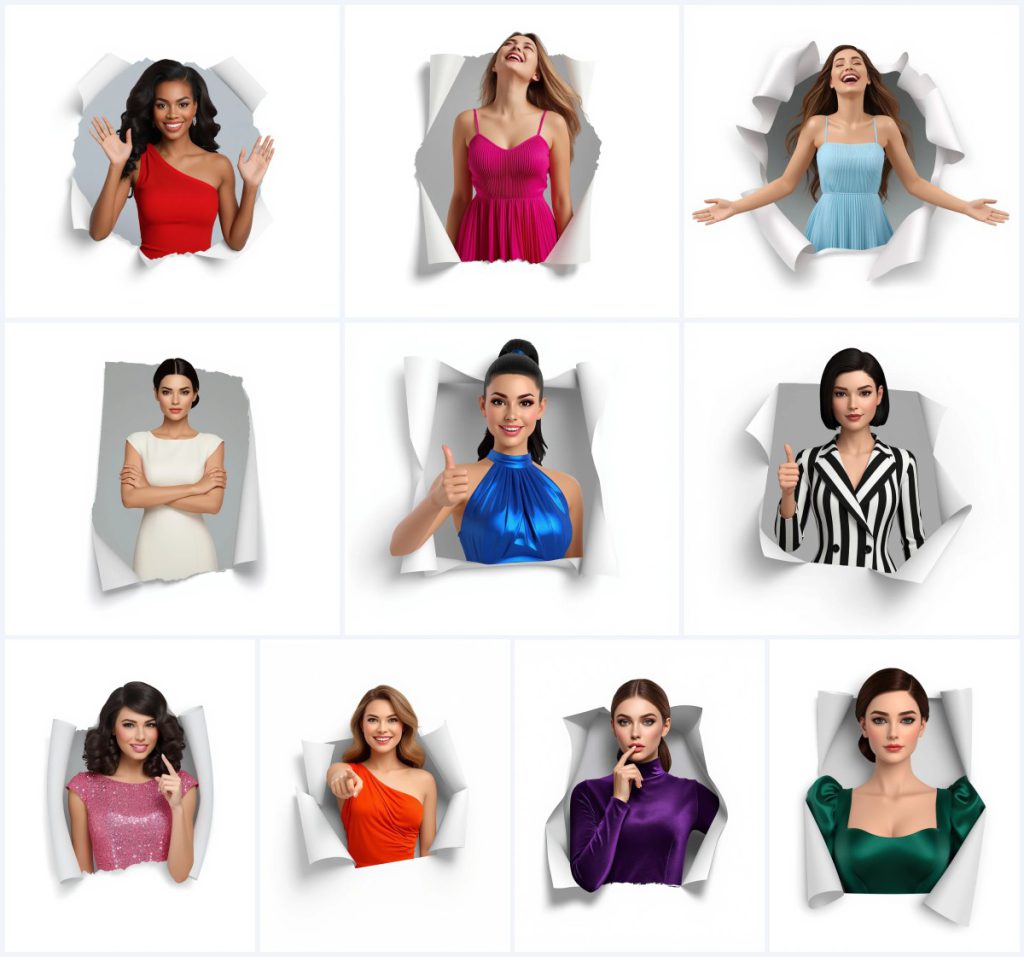
This collection brings together ten distinct digital illustration prompts, each built around a single, consistent female character captured in a polished 3D render. The unifying visual device is a torn paper hole framing her chest-up portrait, while her outfit, expression, and gesture shift dramatically across the series. From a confident thumbs-up in a metallic blue halter dress to a playful wink in a sparkly pink mini dress, every card delivers a self-contained mood ready for fast generation.
The prompts lean into high-resolution, ultra-clean sharpness and a light grey gradient background, making them ideal for fashion concept boards, character design exploration, or social-media content. Because the face remains identical across all ten, you can build a cohesive brand look while experimenting with colour, fabric, and pose. Whether you need a serene ivory sheath moment or a lively sky-blue laugh, this set gives you ten instant on-ramps to polished digital portraits.
What this ten-prompt portrait collection is asking for
Every prompt in the set describes the same beautiful woman in a chest-up 3D render, emerging through a realistic torn paper hole. The AI is instructed to keep her facial structure and identity identical across all generations while varying her clothing, expression, and hand gesture. The torn paper edge wraps naturally around her half-body, and a light grey gradient fills the inside of the hole, creating a consistent framing device that unifies the series.
- Identical facial structure and identity across all ten renders
- Chest-up framing with the woman emerging through a torn paper hole
- Realistic ripped edges wrapping naturally around her half-body
- Light grey gradient colour subtly filling the inside of the hole
- Ultra-clean, high-resolution, sharp, polished 3D render quality
- A distinct western party dress, expression, and gesture per prompt
The shared torn-paper stage and its shifting moods
The consistent backdrop is described as “a light grey gradient color subtly filling the inside of the hole” with “realistic, ripped edges wrapping naturally around her half-body.” This minimal stage puts all the focus on the woman’s face, hair, and dress. The torn paper suggests a playful reveal, as if she is breaking through a surface into the viewer’s space, which adds a dynamic editorial feel without complicating the composition.
Across the ten cards, the emotional register swings from “a serene and composed expression, arms gracefully crossed” to “boundless energy, captured in a moment of hearty laughter, her head tilted back.” The gestures are specific and camera-ready: a thumbs-up, a wink-and-point, a hand touching the lips. Each prompt quotes its own action, such as “giving a chic thumbs-up with a subtle, knowing smile” or “winking mischievously while subtly pointing a finger off-frame,” so the AI receives a clear performance direction.
Why this collection works for fast, cohesive creativity
- It keeps the character’s face identical, so you can build a consistent model or avatar across multiple moods and outfit changes without re-prompting for facial likeness.
- The torn-paper framing device adds instant editorial polish, making each render feel like a finished magazine cover or social-media asset straight out of the generator.
- Ten distinct colour-and-fabric combinations—from emerald green silk to tangerine orange draped fabric—give you a ready-made palette to test which vibe resonates with your audience.
Three stylistic directions already embedded in the prompt set
The prompt language naturally supports three stylistic interpretations without leaving its own boundaries. You can lean into the hyper-realistic 3D portrait look, push the torn-paper effect toward graphic-design collage, or emphasise the fashion-editorial gloss. Because every card already specifies “ultra-clean, high-resolution, sharp, polished 3D render,” you stay within the prompt’s core aesthetic while shifting emphasis.
- Hyper-realistic 3D portrait: Dial up the skin texture and eye reflections so the woman feels almost photographic, while keeping the torn paper edge crisp and dimensional.
- Graphic pop-art collage: Let the ripped paper hole read as a bold graphic element with high contrast against the light grey gradient, turning each portrait into a poster-like statement.
- Fashion-editorial gloss: Focus on the fabric details—velvet, silk, pleats, sparkle—and treat the lighting like a high-end beauty campaign, with soft shadows and a clean backdrop.
How to generate the full set step by step
Working through all ten prompts is straightforward if you treat each card as a separate generation session while keeping your seed or reference image consistent for the face. Start by copying the first prompt exactly, then move through the list, adjusting only the outfit and gesture details that the AI needs to change. A reference photo of the desired face will help maintain identity across the series.
- Copy the first prompt. Pick one card, such as the Confident Woman in a Vibrant Red One-Shoulder Dress, and copy its full text from the collection above.
- Upload a face reference. Use a clear, front-facing photo of the woman whose identity you want to keep. Attach it in your AI tool and instruct the model to match facial structure.
- Generate the initial render. Run the prompt and review the output. Check that the torn paper hole, light grey gradient, and dress colour match the description.
- Check hands and gesture. Zoom in on the fingers. If the prompt asks for a thumbs-up, crossed arms, or a pointing finger, verify that the hand anatomy reads correctly.
- Check the face. Compare the facial structure against your reference. Eyes, nose shape, and jawline should remain consistent before you move to the next card.
- Repeat for the remaining nine. Copy the next prompt, keep the same reference image and seed if available, and generate. Repeat until all ten portraits are complete.
Choosing the right reference photo for consistent identity
A single high-quality reference photo is the backbone of this collection because every prompt insists on an identical facial structure. Without it, the AI will invent a new face for each card, breaking the cohesive look. Pick a reference that matches the lighting and angle you want across all ten renders.
- Use a front-facing, chest-up portrait with even, diffused lighting so the AI can map features cleanly onto each 3D render.
- Avoid heavy makeup or extreme expressions in the reference; a neutral, softly smiling face gives the AI flexibility to add laughter, winks, or serene composure later.
- A high-resolution image with visible skin texture and sharp eye detail helps the model produce the “ultra-clean, sharp” quality the prompts demand.
Tools that handle this prompt collection well
Different AI image generators interpret the torn-paper framing and fabric descriptions with varying realism. The table below compares four popular tools, noting what each brings to a prompt that demands a consistent face, a light grey gradient background, and a specific western party dress.
| Tool | Access | Typical realism | Useful here for |
|---|---|---|---|
| ChatGPT | DALL·E integration | High, with strong prompt adherence | Maintaining the identical facial structure across all ten cards while rendering the torn paper hole cleanly. |
| Google Gemini | Imagen integration | Photorealistic with good fabric detail | Capturing the shimmer of the metallic blue halter dress and the soft pleats accurately. |
| Leonardo AI | Web platform, free tier available | Cinematic and stylised realism | Producing the deep purple velvet texture and the thoughtful hand-on-lips pose with dramatic lighting. |
| Midjourney | Discord-based, subscription | Artistic, high-detail realism | Rendering the sparkly pink mini dress and the playful wink with a polished, glam-theme finish. |
Three tips to sharpen your torn-paper portraits
Small adjustments in how you handle the prompt details can make the difference between a good render and a great one. Focus on the materials and objects that already appear in the prompt text, and treat each as a lever you can fine-tune.
- Emphasise the “realistic, ripped edges” by adding a depth-of-field cue in your negative prompt if the paper looks too flat; the torn paper hole should cast a subtle shadow on the woman’s body.
- When rendering the emerald green silk gown, boost the specular highlights slightly in your tool’s style settings so the “classic scoop neckline” reads as liquid-like silk rather than matte cotton.
- For the striped blazer dress card, check that the “bold vertical stripes” align with the double-breasted design; if they warp, add “straight, uninterrupted vertical lines” as a reinforcing phrase.
Common failures and what to tweak
Even a well-written prompt set can trip over a few recurring problems. The table below lists four issues you are likely to encounter when generating these ten cards, along with the specific change that usually fixes them.
| Issue | What to change |
|---|---|
| Face drifts across cards | Re-upload the same reference photo for every generation and add “identical facial structure to the reference image” at the start of each prompt. |
| Torn paper hole merges with the dress | Add “clear separation between the ripped paper edge and the clothing” and reduce the grey gradient’s opacity if it bleeds into the fabric. |
| Hands look distorted in the thumbs-up or pointing gesture | Switch to a model version with better hand anatomy, or add “anatomically correct fingers, clearly defined thumb” to the prompt. |
| Sparkly pink mini dress appears flat | Include “specular sparkle highlights on the dress fabric” and use a higher step count to let the renderer resolve the glitter texture. |
Frequently Asked Questions
Can I use a different background instead of the light grey gradient?
Yes, you can replace “light grey gradient” with any solid or gradient colour you prefer. Just keep the phrase “subtly filling the inside of the hole” so the torn paper framing still reads as a distinct layer. The key is maintaining contrast between the ripped edge and the fill so the woman still appears to emerge through the paper.
Do I have to generate all ten prompts to get a consistent face?
No, each prompt works as a standalone image. However, the collection is designed so that if you use the same face reference across all ten, you build a cohesive character set. If you only need one look, pick the card that matches your desired dress and expression and generate just that one.
What if the AI changes the woman’s hairstyle even though the prompt specifies it?
Hairstyle drift can happen when the model prioritises the dress or gesture. Reinforce the hair description by placing it closer to the beginning of the prompt, for example moving “her dark hair is styled in a sleek, low bun” right after the facial identity line. You can also add the hairstyle to a positive style tag if your tool supports it.
Conclusion
This ten-prompt collection turns a simple torn-paper framing device into a versatile studio for character-driven fashion illustration. By locking the face and backdrop while rotating through vibrant dresses—from a tangerine orange draped number to a regal emerald silk gown—you get a ready-to-use library of editorial portraits. The ultra-clean, high-resolution 3D render quality keeps the output sharp enough for commercial use, while the consistent identity makes the set feel like a true series rather than ten disconnected images. Whether you are building a brand mascot, testing outfit concepts, or populating a lookbook, these prompts give you a fast, repeatable workflow that puts expression and fabric detail front and centre.
Remember to edit only a photo you have the legal right to modify, and keep your reference image permissions in check before generating.