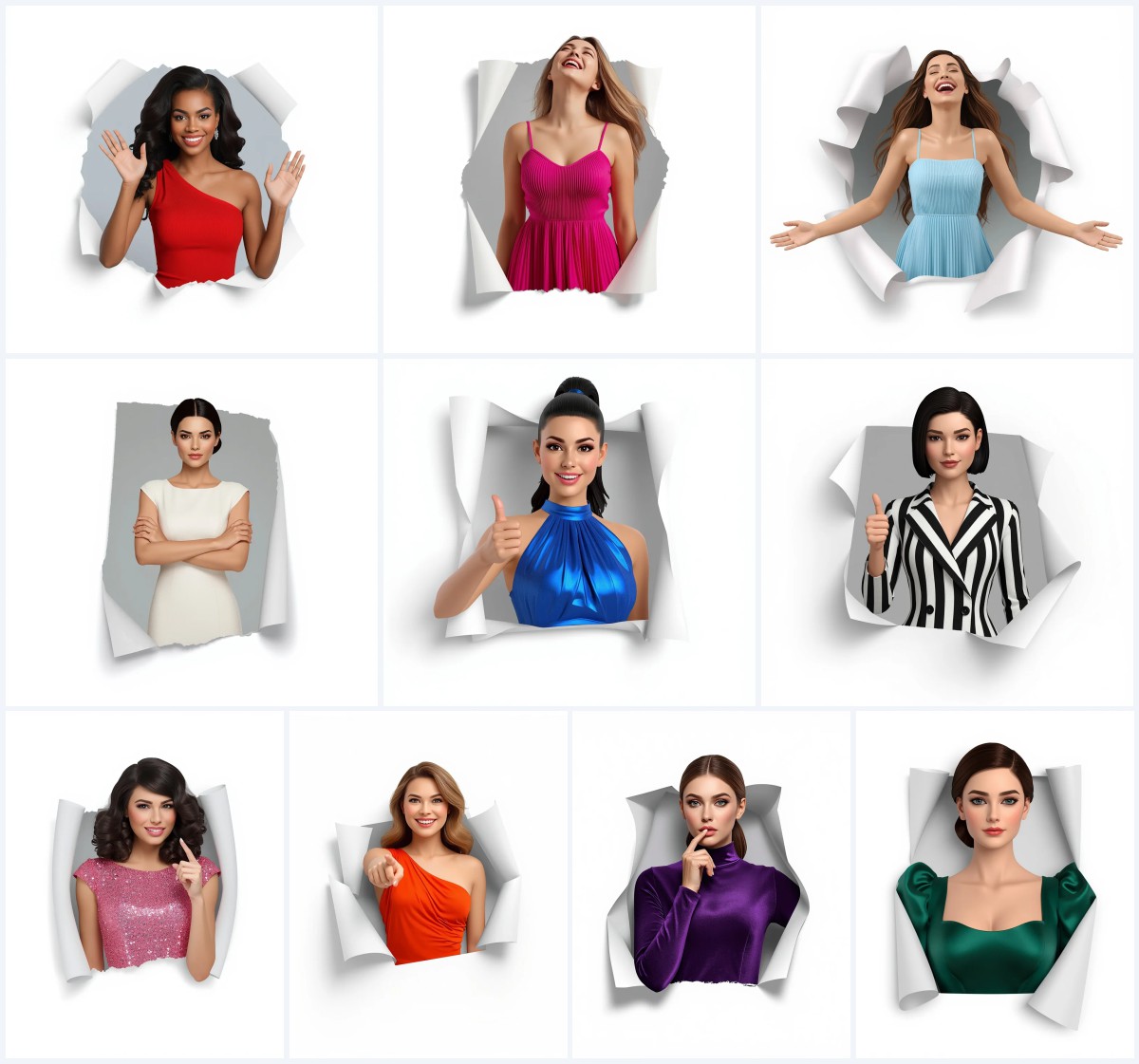


Best 10 AI Prompts for Women’s Trending Instagram Viral Photos
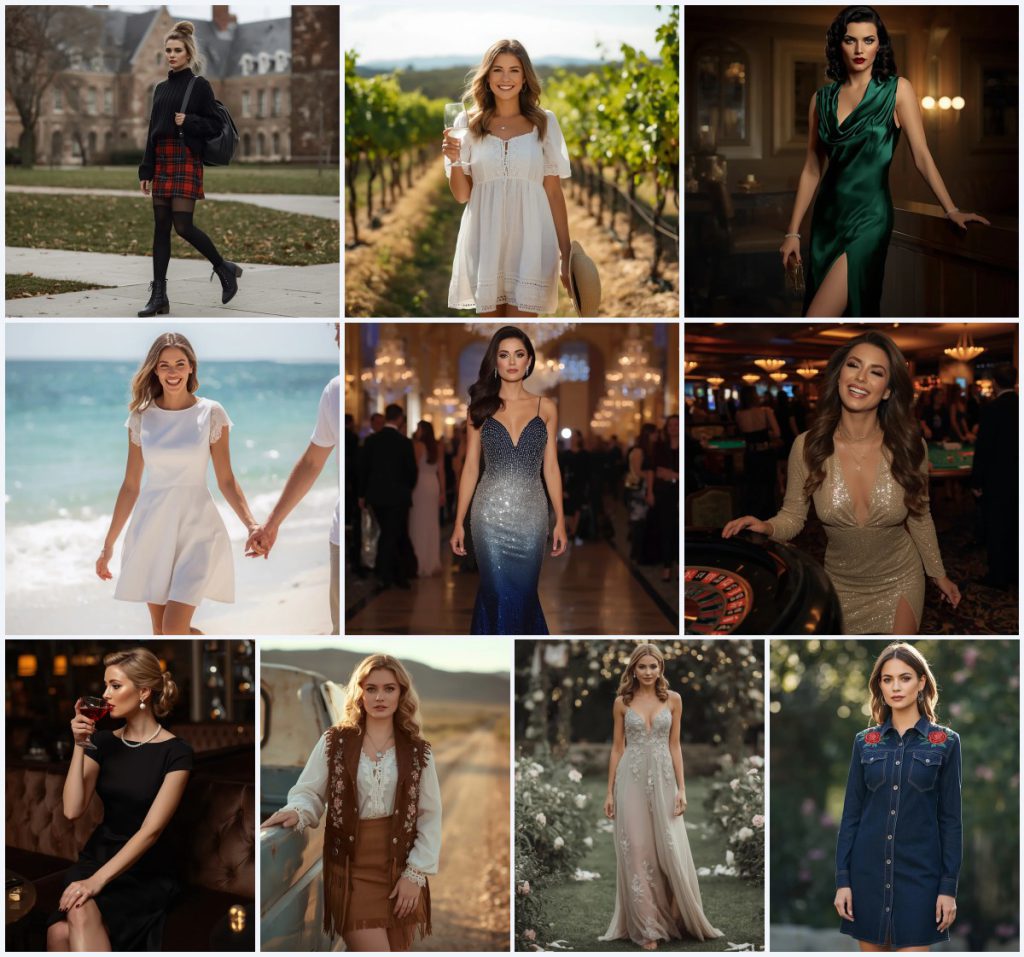
This collection gathers ten AI image prompts built around women's fashion moments that tend to perform well on Instagram. Each prompt describes a full scene: a subject, an outfit, a setting, and camera language such as a 50mm or 85mm lens with a specific aperture. The range moves from a university campus in autumn to a vineyard, a film noir bar, a beach engagement, a gala dinner, a casino, a cocktail lounge, a dirt road with a vintage pickup truck, a garden wedding, and a casual garden party.
Because the set is varied, the smart approach is to treat it as one wardrobe of ideas rather than ten unrelated pictures. The shared thread is a confident woman in a clearly described outfit, placed in a location that gives the image a story. You can swap one prompt's location for another's if you keep the clothing, lighting, and lens details consistent. The sections below explain what the prompts contain, how to read the scene clauses, and how to generate a result that still looks like a photograph.
What this set of women's viral photo prompts is asking for
The collection asks for ten distinct portraits, each driven by a garment and a place. The prompts do not ask for abstract beauty; they ask for a specific outfit in a specific light, with a camera setup that suggests a real photographer took the shot. That is why details such as a bold red and black plaid mini skirt, a chic white eyelet mini dress, and an ombre sequin gown matter more than generic words like beautiful or stylish.
- A bold red and black plaid mini skirt with an oversized chunky knit sweater on a university campus.
- A chic white eyelet mini dress with puff sleeves and a straw hat in a sun-drenched vineyard.
- A floor-length emerald green silk charmeuse gown with a cowl neck and high thigh slit in a dim art deco bar.
- A knee-length little white dress with lace sleeve details on a sunny beach for an engagement announcement.
- A gold sequin mini dress with a V-neckline and long sleeves at a roulette table in a glamorous casino.
- A dark wash denim western dress with crimson and forest green rose embroidery at a casual garden party.
Reading the scene clauses in these prompts
Each prompt builds its world through location and light. In the campus prompt, the subject "walks purposefully across a university campus on a crisp autumn day," and the background holds "historic university buildings, fallen autumn leaves, and a soft, diffused light from the overcast sky." The vineyard prompt instead places her "amidst a sun-drenched vineyard" with "lush green grapevines, distant rolling hills, and a clear blue sky."
The camera language keeps the scenes grounded. Several prompts specify "Photographed with a 50mm lens, f/2.8" or "Shot with an 85mm lens, f/1.8, cinematic lighting." The gala prompt describes "a luxurious blur of crystal chandeliers, ornate architectural details, and elegantly dressed guests," while the western prompt sets her "beside a vintage pickup truck on a dirt road." Those clauses tell the model where to put the subject and what to blur.
Why these prompts work for Instagram-style portraits
These prompts work because they combine a strong garment with a believable location and a real camera setting. The model gets enough information to build a photograph rather than a poster, and the viewer gets a story they can read in one glance.
- The outfit is described in concrete pieces, such as a plaid mini skirt with thick black tights and ankle boots, so the model has something specific to render.
- The location carries mood, from the overcast academic campus to the dim art deco bar, which stops the image from looking like a studio cutout.
- The lens and aperture notes, like 85mm at f/1.8, push shallow depth of field and natural skin rendering instead of a flat, over-smoothed look.
Three style directions inside this collection
You can group these ten prompts into three style directions, and each one stays inside the collection rather than pulling in outside references. The academic-chic look leans on plaid, knitwear, and overcast light. The glamour look leans on silk charmeuse, sequins, and dramatic chiaroscuro. The soft romantic look leans on eyelet, lace, floral appliqué, and warm daylight. Pick one direction before you generate so the wardrobe, location, and lighting agree with each other.
- Academic-chic: The campus prompt pairs a bold red and black plaid mini skirt with an oversized chunky knit sweater, thick black tights, sturdy ankle boots, and a leather backpack under soft overcast light.
- Old Hollywood glamour: The film noir prompt uses liquid emerald green silk charmeuse with a cowl neck and high thigh slit, styled with deep red lipstick, smoky eyes, and strong chiaroscuro in a dim art deco bar.
- Soft romantic daylight: The vineyard and garden wedding prompts rely on a chic white eyelet mini dress with puff sleeves, or a floor-length gown with floral appliqués, both lit by warm natural sunlight.
How to turn one of these prompts into a finished image
Work one prompt at a time and keep the outfit, location, and lens clauses intact. If you change the location, change the lighting note with it, because the campus prompt depends on overcast light while the vineyard prompt depends on warm afternoon sun. Generate a few variations, then inspect the result the way a photo editor would.
- Copy the prompt. Copy the full text of the prompt you want, including the lens and aperture sentence, so the model receives the camera language as well as the description.
- Upload a reference. Upload a reference photo of the person or the garment if the tool supports image input, and state which parts should stay fixed, such as the face or the dress silhouette.
- Generate. Run the prompt and produce several variations rather than one, because lighting and fabric rendering change noticeably between seeds.
- Check the hands. Look closely at fingers, especially in the casino prompt where she laughs animatedly and in the engagement prompt where she holds hands with her fiancé.
- Check the face. Confirm the makeup matches the prompt, such as deep red lipstick and smoky eyes in the film noir portrait or a subtle red lip in the little black dress scene.
- Check the main object. Verify the hero item is correct, whether that is the ombre sequin gown, the embroidered suede vest, or the rose embroidery on the denim dress.
Using a reference photo with these prompts
A reference photo helps most when it matches the framing the prompt already describes. The collection includes full-length walks, three-quarter portraits, and mid-shot portraits, so choose a reference with similar distance and angle. If the tool lets you weight the reference, keep the face and body proportions close to the original and let the prompt handle the clothing and background.
- For three-quarter portraits such as the emerald silk charmeuse or the embroidered suede vest, use a reference shot from roughly chest height with the subject angled away from the camera.
- For full-length scenes such as the gala entrance or the vineyard walk, use a reference where the whole outfit is visible, including footwear like ankle boots or espadrille sandals.
- For mid-shot portraits such as the denim dress with rose embroidery, use a reference framed from the waist up so the collar, button-down front, and shoulder embroidery stay readable.
Which tools handle these prompts best
Different tools respond differently to long descriptive prompts. ChatGPT and Google Gemini are useful for rewriting and tightening the text before you generate. Leonardo AI and Midjourney are stronger at rendering the final photograph, especially when the prompt names a lens and aperture. Match the tool to the job rather than expecting one platform to do everything.
| Tool | Access | Typical realism | Useful here for |
|---|---|---|---|
| ChatGPT | Free and paid tiers | Moderate, improving with image models | Rewriting the casino prompt so the gold sequin mini dress and roulette table stay clear without overloading the sentence. |
| Google Gemini | Free and paid tiers | Moderate to high for scene description | Expanding the vineyard prompt while keeping the chic white eyelet mini dress, straw hat, and espadrille sandals consistent. |
| Leonardo AI | Free credits with paid plans | High for portrait and fabric detail | Rendering the emerald green silk charmeuse gown with its cowl neck and the dramatic chiaroscuro of the art deco bar. |
| Midjourney | Paid subscription | Very high for photographic look | Producing the 85mm f/1.8 look for the gala prompt with the ombre sequin gown and the blurred crystal chandeliers. |
Tips for cleaner results from this collection
Small adjustments to the prompt text often fix the biggest problems. Keep the material words, because silk charmeuse, sequins, eyelet, and suede each render differently. Keep the footwear, because ankle boots, espadrille sandals, cowboy boots, and classic black pumps change the pose and the ground contact. Keep the light source, because overcast sky, warm afternoon sunlight, and low-key casino lighting produce completely different images even with the same outfit.
- Name the fabric, not just the color: liquid emerald green silk charmeuse behaves differently from a matte green dress, and gold sequins need a light source to shimmer.
- Keep the accessory list short and specific, such as a single strand of lustrous pearls, delicate hoop earrings, or a stylish leather backpack, so the model does not invent clutter.
- State the lens and aperture in the same sentence as the subject, for example 50mm at f/2.8 for the campus walk or 85mm at f/2.0 for the beach engagement photo.
Common failures and how to correct them
Most failures in this set come from the model ignoring one clause while rendering the others well. The fix is usually to move the ignored detail earlier in the prompt or to repeat it in plain language. Check the garment first, then the hands, then the background, because a wrong background is easier to accept than a wrong dress.
| Issue | What to change |
|---|---|
| The plaid pattern on the mini skirt turns into a generic check or loses its red and black contrast. | Restate the colors as bold red and black plaid and mention the oversized chunky knit sweater in the same sentence to anchor the outfit. |
| The silk charmeuse gown looks matte instead of liquid and reflective. | Add a direct light source such as strong chiaroscuro in a dim art deco bar and repeat the words liquid emerald green silk charmeuse. |
| The sequin gown loses its ombre transition and becomes one flat color. | Spell out the gradient from deep sapphire to sparkling silver sequins and keep the mermaid tail flare in the description. |
| Hands look distorted in scenes where she holds something, such as the wine glass in the vineyard or the cocktail in the lounge. | Reduce competing actions in the prompt and specify a simple grip, then regenerate and check the fingers before accepting the image. |
Frequently Asked Questions
Can I use one of these prompts without uploading a reference photo?
Yes. The prompts are written to stand alone, because they describe the subject, the outfit, the location, and the camera settings. A reference photo mainly helps when you want a specific face or body type to stay consistent across several images.
Which prompt in this collection is easiest for a beginner?
The little black dress cocktail prompt is the most forgiving, because a boat neck, knee-length A-line skirt, and a single strand of lustrous pearls are simple shapes that most models render well. The plaid mini skirt and the ombre sequin gown are harder because pattern and gradient are easy to get wrong.
Why do the prompts mention a lens and aperture?
The lens and aperture notes, such as 85mm at f/1.8 or 50mm at f/2.8, tell the model how much background blur and compression to apply. They push the result toward a real photograph instead of a flat illustration, and they help keep the subject separated from busy backgrounds like the casino floor or the gala crowd.
Conclusion
This collection works best when you treat each prompt as a small production: one woman, one outfit, one location, one light, one lens. Pick the direction that fits your feed, whether that is academic-chic, old Hollywood glamour, or soft romantic daylight, and keep the material words and camera notes intact. Generate several variations, then check the hands, the face, and the hero garment before you post. If you edit a reference photo, make sure it is one you have the right to edit.
Only edit and publish a photo when you have the right to edit that image and the consent of anyone shown in it.