

Best 10 Masterpiece AI Prompts for Hyper Realistic Still Life Photography of Rare Artifacts
Still life photography has long been a medium for capturing the quiet beauty of objects, but AI image generation elevates it to new heights. This collection of ten masterpiece prompts focuses on hyper-realistic still life scenes featuring rare artifacts, blending historical charm with futuristic elements. Each prompt is designed to produce images that feel tangible, as if you could reach out and touch the weathered surfaces of ancient relics or the sleek contours of advanced technology.
Whether you're a digital artist, a content creator, or simply an enthusiast of visual storytelling, these prompts offer a gateway to fast creativity. They cover a range of aesthetics—from sepia-toned vintage scrapbooks to neon-lit cyberpunk collages—ensuring there's something for every taste. The key is in the details: precise descriptions of textures, lighting, and composition guide the AI to generate images that rival professional photography.
What these rare artifact still life prompts are asking for
This collection comprises ten distinct prompts, each crafting a hyper-realistic still life scene around rare artifacts or themed compositions. They share a common thread of meticulous detail, emphasizing texture, lighting, and narrative depth. From a robotic hand performing a bio-scan on a miniature figure to a steampunk collage with gilded gears, every prompt builds a self-contained world where objects tell a story.
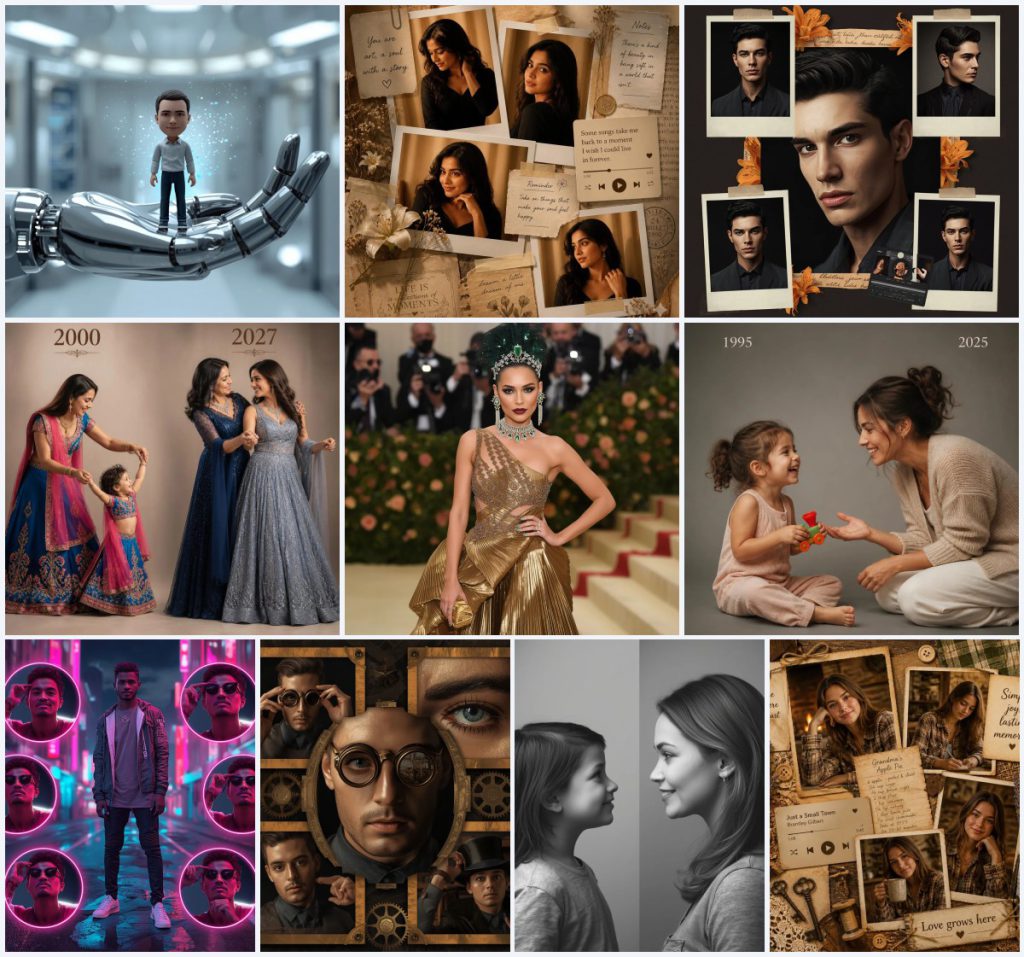
- A hyper-realistic miniature big-head character standing in a large advanced robotic hand with fine blue and green light patterns.
- A vintage scrapbook collage with polaroid-style frames, dried flowers, white lilies, and handwritten notes on torn paper.
- A masculine vintage scrapbook with moody tones, orange lily flowers, and close-up shots of lips, jawline, and eyes.
- A generational dance portrait with a mother and daughter in traditional Indian dress and modern evening gowns across two timelines.
- A Met Gala-inspired red carpet scene with a sculptural gold gown, laser-cut patterns, and an oversized feathered headpiece.
- A steampunk collage with brass plate frames, gear reflections in the eye, and a character adjusting goggles.
The scene each prompt builds
The scenes vary widely but all anchor themselves in hyper-realism. In the robotic interaction prompt, the character stands "inside a large advanced robotic hand" with "fine, intricate blue and green light patterns" projecting onto the skin, creating a clinical yet intimate atmosphere. The vintage scrapbook prompt layers "multiple polaroid-style frames" with "warm golden tones and soft cinematic lighting," evoking a cozy, nostalgic mood.
Other prompts construct dramatic tableaus. The generational dance piece splits the frame into two timelines, with one side showing "the mother and her toddler daughter dancing playfully" in vibrant Indian attire, while the other features "the grown-up daughter and her mother, elegantly dancing together" in modern gowns. The steampunk collage uses "frames resembling brass plates and worn leather" to frame a subject with a "confident, slightly mischievous gaze," surrounded by industrial details.
Why these prompts work for hyper-realistic still life
These prompts excel because they combine specific, sensory details with clear compositional instructions, guiding AI models to produce images with depth and authenticity. The focus on rare artifacts—whether vintage paper textures or cybernetic orbs—adds a layer of uniqueness that standard prompts lack. By specifying materials like "emerald silk" or "reclaimed wood walls," the prompts ensure the output feels grounded and tactile.
- They use precise material descriptions, such as "intricate laser-cut patterns" and "diamond chandelier earrings," to enhance texture realism.
- The prompts include dynamic interactions, like a robotic hand performing a bio-scan, which adds narrative tension and visual interest.
- They leverage lighting cues, including "soft cinematic lighting" and "neon highlights," to create mood and emphasize artifact details.
Three styles to try with these prompts
While these prompts are inherently hyper-realistic, you can experiment with three distinct stylistic approaches to vary the output. Each style stays within the prompt's core framework, enhancing rather than altering the intended scene. This flexibility lets you tailor the image to your project's needs without losing the essence of the rare artifact theme.
styles
Array
How to generate these images step by step
Creating hyper-realistic still life images from these prompts is straightforward with the right approach. Follow these steps to ensure your AI-generated results match the intricate details described. The process involves careful prompt handling, reference image use, and post-generation checks to catch common flaws like distorted hands or faces.
- Copy the prompt. Select one prompt from the collection, such as the steampunk collage, and copy its full text without any modifications to preserve all descriptive elements.
- Upload a reference image. If the prompt requires a face or subject, upload a clear, well-lit photo where the person's features are visible, ensuring the AI can match identity accurately.
- Generate the image. Paste the prompt into your chosen AI tool and run it with settings optimized for photorealism, such as high resolution and low stylization values.
- Check the hands. Examine the output for hand distortions, especially in prompts like the robotic interaction where fingers are cupped, and regenerate if digits appear fused or unnatural.
- Check the face. Verify that facial features in portraits or collages match the reference and have natural expressions, adjusting the prompt if the gaze or smile looks off.
- Check the main object. Inspect key artifacts like the gold gown or brass plates for texture accuracy, ensuring details like "crystal embellishments" are crisp and not blurred.
Using a reference photo effectively
Several prompts in this collection explicitly ask for a reference image to anchor the subject's identity. Uploading a high-quality photo is crucial for maintaining realism, as the AI uses it to replicate facial features, clothing, and overall appearance. The right reference can make the difference between a generic output and a personalized masterpiece.
- Choose a photo with even, soft lighting to avoid harsh shadows that might confuse the AI when integrating the subject into the new scene.
- Ensure the reference matches the described pose or expression, like a "confident smirk" for the cyberpunk collage, to help the AI align the composition.
- Keep the original outfit and hairstyle intact if the prompt specifies, such as preserving "clothing, colors, fabric" in the masculine vintage scrapbook.
Best AI tools for these prompts
Different AI image generators handle hyper-realistic prompts with varying degrees of success. The table below compares four popular tools, highlighting their access, typical realism, and specific usefulness for details in this collection. Each tool has strengths that can bring out unique aspects of the rare artifact scenes.
table
Array
Three tips for better results
To elevate your still life images, focus on the tangible elements within the prompts. Small adjustments can significantly impact the final output, making artifacts look more authentic. These tips draw directly from the materials and objects mentioned across the collection.
list
Array
Common issues and how to fix them
Even with detailed prompts, AI-generated images can fall short in specific areas. The table below outlines typical failures you might encounter with this collection and practical changes to address them. These fixes target the actual details from the prompts, ensuring your results stay true to the intended hyper-realistic still life.
table
Array
Frequently Asked Questions
Can I use these prompts without a reference image?
Yes, but prompts that specify a reference will produce generic faces instead of personalized ones. For scenes like the cyberpunk collage, you can remove the reference instruction, but the subject's identity won't match a specific person.
What's the best resolution for hyper-realistic still life images?
Aim for at least 1024x1024 pixels, but for intricate details like the gold gown's crystal embellishments, higher resolutions like 2048x2048 will capture finer textures and prevent blurring.
How do I avoid the AI misinterpreting the sepia tones?
If the vintage scrapbook comes out too brown or washed out, add 'balanced sepia with subtle cream highlights' to the prompt to maintain contrast and keep the white lilies distinct.
Conclusion
This collection of ten masterpiece prompts opens up a world of hyper-realistic still life photography, blending rare artifacts with imaginative scenes. From the delicate bio-scan light patterns to the rustic farmhouse textures, each prompt is a tool for fast, high-quality creativity. By experimenting with styles, tools, and fixes, you can produce images that feel both timeless and cutting-edge.
Remember to only edit and share photos you have the legal right to modify, ensuring your creative work respects ownership and privacy.